
An asset bubble occurs when the prices of assets are over-inflated due to an excess of demand.

'My father was asking me what an IPO is. He has no clue and he has never been an investor.' 'My mother, who was the one to ring the bell, has been an investor in Policybazaar for the past 6-7 years and I would say she has made good returns.'

At interactions last week with senior officials from the Reserve Bank of India, select banks gave feedback on two key bond market concerns, namely, recent volatility in the rupee-dollar exchange rate and heavy losses incurred on floating rate government bonds due to a demand-supply mismatch, sources told Business Standard. The discussions were held ahead of the RBI's next monetary policy statement, scheduled on August 5. Indian banks are large holders of government securities because of a regulatory mandate to set aside a certain percentage of deposits in sovereign bonds.

Under the scheme coming into effect from April 1, 2018, a donor could purchase bonds from authorised banks against cheques or digital payments. These would be redeemed only in the designated account of a registered political party.

The new series claims GDP grew at seven per cent between April and June 2015, while gross value added (GVA) grew at 7.1 per cent.

Russia's Sputnik V vaccine and its one-shot version Sputnik Light booster demonstrates high virus-neutralising activity (VNA) against the highly-contagious Omicron variant of COVID-19, providing a strong defence against severe disease and hospitalisation, according to a study.

Inching closer to resolving the Punjab and Maharashtra Cooperative (PMC) Bank issue, the Reserve Bank on Monday came out with a draft scheme for takeover of the crisis-hit bank by the Delhi-based Unity Small Finance Bank (USFB). The draft scheme of amalgamation envisages takeover of the assets and liabilities of PMC Bank, including deposits, by USFB, thus giving a greater degree of protection for the depositors, the RBI said. In September 2019, the RBI had superseded the board of PMC Bank and placed it under regulatory restrictions, including cap on withdrawals by its customers, after detection of certain financial irregularities, hiding and misreporting of loans given to real estate developer HDIL.

20 Indian CEOs and 350 companies are participating in the Hannover Fair.

'The markets haven't corrected, that doesn't mean that they will only go up and up.'

'Any normalisation exercise will bring its share of volatility.'
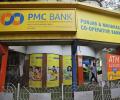
The restrictions on Punjab and Maharashtra Cooperative (PMC) Bank has been extended for another three months till the end of March next year. Reserve Bank of India (RBI) has extended the restrictions as further action on the draft scheme for the takeover of the crisis-hit bank by the Delhi-based Unity Small Finance Bank (USFB) is in process. The central bank had prepared a draft scheme of amalgamation and the same was placed in the public domain on November 22 as part of seeking suggestions and objections, if any, from members, depositors and other creditors of PMC Bank and USFB.

'At the first board meeting I chaired, I sensed that corporate governance is an issue in this company.' 'I started taking steps that may have aggrieved a few.' 'This has now become a mission I intend to accomplish before I step down.'

Investors should keep updating their personal and bank details with fund houses. They should also opt for the auto-pay facility so that the dividend proceeds get credited into their account directly, advises Bindisha Sarang.

The Securities and Exchange Board of India (Sebi) could soon issue interim orders imposing a market ban on the two former fund managers of Axis Mutual Fund (MF) for suspected front-running of trades, said people with knowledge of the development. "The market regulator has gathered prima facie evidence that demonstrates that the duo has violated the integrity of the market. "While a detailed investigation is still pending in the matter, Sebi could take action under Section 11 (4) to prevent further harm to the investors and the securities market," said a source.

Reserve Bank of India Deputy Governor M Rajeshwar Rao on Wednesday said while the central bank will foster growth in the microfinance (MFI) sector, the lenders in the space should not throw caution to the wind to achieve higher asset growth and returns. MFIs should not try to mimic the strategies of mainstream finance, as those serving the microfinance borrowers have a greater need to balance the social objectives with their lending operations, he said.

Prime Minister Rishi Sunak on Wednesday held his first Cabinet meeting with the new team as he prepares for his debut at Prime Minister's Questions, the first big test of Britain's Indian-origin premier's leadership.

Despite the Sensex's 74 per cent run-up over the past year, the Indian equity market could still reward investors if the expected revival in earnings materialises, according to market experts. Returns during the coming year are more likely to be in line with longer-term trends (the Sensex's five-year return is around 14 per cent). Several factors are expected to aid the market's performance this year.

Roles ranging from digital marketing to wealth management are some of the emerging roles, notes Sekhar Garisa, CEO, foundit, a job search app.

The executive order, which was signed by Trump on Thursday, prohibits certain purchases involving publicly traded securities or any securities that are derivative of or are designed to provide investment exposure to such securities of any Communist Chinese military company.

'We will take tough calls where needed in the interest of doing what is right.'

ICICI MF recently filed for an ETF that will track the Nifty Alpha Low-Volatility 30 Index. It is part of the suite of smart-beta indices with the NSE, with the portfolio designed using a combination of two factors.

India has been ranked at 142 among 189 countries in the latest World Bank's "Ease of Doing Business" report, a drop by two places from the last year's ranking.

In January, Visa's chief executive officer, Al Kelly, said during an earnings call that "there's been a burst of the balloon in valuations in the fintech world". Noting that the trend of lower valuations "is a helpful characteristic of the current environment", he added: "We will look for capabilities and management teams that will bring more value to Visa than we can bring ourselves." Data from KPMG's Pulse of Fintech H2'22 shows that global fintech investment - via mergers and acquisitions (M&As), private equity (PE) and venture capital (VC) firms - at $164.1 billion in 2022, was down 31 per cent over the year before. Indian fintechs held up better during this timeframe, attracting $6 billion, or a fall of 24 per cent.

The assets mentioned in the Sebi order are already in possession of the ED for violation of an anti-money laundering law by Mallya and PMLA overrides all other laws, providing ED first right over the assets.

Remember, the security of your job primarily depends on two major factors -- how relevant you are for the organisation and how the organisation is aligned to its stakeholders (investors, clients and employees)

There is considerable speculation as to whether this award would have any bearing on another Vodafone-type case, namely, the ongoing tax-related arbitration proceedings with Cairn Energy.

The amount of money lying unclaimed with the Life Insurance Corporation of India dwarfs the budgets of many ministries. There was Rs 21,539.5 crore which lay unclaimed with India's largest insurance company, according to details in the initial public offer (IPO) document it filed over the weekend. The regulatory documentation is ahead of LIC selling shares to the public through the stock exchange for the first time this financial year. This will be India's largest ever public listing.

'Gold could benefit from the resulting risk aversion, as happened last year.'

'Looking at the speed at which changes were made post the Franklin Templeton issue, we are awaiting more stricter norms in the months to come.'

'If they are not, then the Modi government should order a JPC immediately.'

He also said a total of Rs 38.75 crore, deposited by people in the Karavannur Cooperative bank in this district, which is now facing charges, had already been returned.

Every move that strengthens Cyrus Mistry's position in companies like Indian Hotels could prolong the uncertainty.

The life insurer tinkered with its business strategy - raised the share of protection plans and reduced dependency on ULIPs in the past four years.

However, experts caution that investors should not expect the big returns they got from the sector between March and September 2020.

The proposed amendments to the Consumer Protection (E-Commerce) Rules, 2020, that are envisioned to protect consumer interests, may further compound the impact of multiplicity of regulations on the e-commerce sector, the Indo-American Chamber of Commerce (IACC) had told the ministry of consumer affairs. IACC, the apex bilateral chamber for Indo-US business, had told the government that the proposed amendments would increase compliance liabilities that risk severely impairing the growth of the sector.

Prime Minister Narendra Modi will on Friday launch two schemes of the Reserve Bank of India (RBI) that may go a long way in changing how the household sector invests, and complains if anything goes wrong with their savings. These schemes - retail direct and an integrated ombudsman - will be launched by the Prime Minister virtually, in the presence of Finance Minister Nirmala Sitharaman. With the introduction of retail direct, a common man can directly take a position in government securities (G-Sec), considered to be the safest asset class a sovereign can offer.

Watch all the proceedings and live debates.

Delhi Chief Minister Arvind Kejriwal on Wednesday appealed to Prime Minister Narendra Modi to have photos of Lord Ganesh and Goddess Lakshmi on currency notes.

In case of any grievance, file a complaint with Sebi on its SCORES (Sebi Complaints Redress System) web site, suggests Sanjay Kumar Singh.

Its obsession for growth, chasing corporate clients and giving up its original mandate of meeting the needs of local trade and businesses. A quarter of its loan book has gone bad. That's an error of business strategy, points out Tamal Bandyopadhyay.
